
Grain & dessert ingredients
Chinese Dessert Ingredients for Breakfast Bowls & Drinks
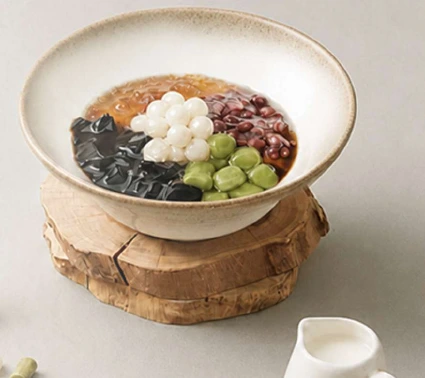
A familiar breakfast bowl can be a useful starting point for understanding Chinese dessert ingredients. Tender grains provide the base; chewy pearls or small starch pieces add another texture. For importers, foodservice teams and beverage developers, the first question is which ingredient suits the intended serving format.
Lanwei Foods · Updated 14 October 2026
Start with the ingredient’s role
The current catalogue groups pre-cooked chickpeas and brown rice with dessert pearls and adazi. These are different ingredients with different preparation requirements. The cereal-bowl comparison describes a serving idea; it does not mean that every item is a breakfast cereal or ready to serve straight from the package.
Pre-cooked chickpeas and brown rice offer a grain-and-legume base for breakfast bowls, congee and desserts. Buffalo-milk pearls and pear-paste pearls introduce a chewy bite. Matcha and herbal adazi are small, chewy starch pieces that can be considered for dessert bowls and milk-based drinks.
Three application directions
A warm breakfast bowl
Explore a grain or chickpea base with milk or a sweet broth. Prepare any pearl or adazi component separately according to its instructions before combining. Test the finished texture and sweetness in the intended serving format.
A chilled dessert bowl
Pair prepared components to contrast tender grains with a chewy topping. A sweet syrup can be considered alongside the base, with the final balance developed for the intended recipe.
A milk-based drink
Pearls or adazi can provide texture in a milk-based drink. Evaluate piece size, drinking or serving method, and texture over the intended service period before choosing a combination.
Preparation is product-specific
Grains in this selection are pre-cooked; pearls and adazi require preparation according to their individual product instructions. This overview does not provide a universal cooking time or storage instruction. Request the relevant product specification and preparation guidance for the exact item being considered.
For a commercial recipe, also confirm ingredient composition, allergens, packaging, shelf life and storage requirements. A product name or serving photograph is not a substitute for that information.
What to include in a buyer enquiry
Tell our Shanghai team whether you are developing a breakfast bowl, dessert or beverage. Include the destination country, ingredients of interest, preferred packaging and estimated quantity. If you have a target texture or sweetness profile, describe it so the discussion starts with the application rather than only a product name.
Buyer questions
Are all of these ingredients ready to eat?
No single preparation method applies to the whole range. The catalogue identifies the grains as pre-cooked; pearls and adazi need preparation according to their product instructions.
Can I confirm allergens and shelf life from this guide?
No. Request the product-specific specification, ingredient and allergen information, shelf life and storage instructions for the item you plan to purchase.
This guide draws on the supplied product handbooks and the current Lanwei catalogue. Applications are serving or development ideas; exact specifications and destination suitability are confirmed for each project.
DISCUSS YOUR APPLICATION
Start with your product brief.
Share your destination country, products of interest, intended use, packaging preference and estimated quantity. Product availability, formulation, specifications, minimum order quantities and lead times are confirmed per project.
zhangyang@lanweifood.com ↗lwfoodcn@lanweifood.com ↗Explore the product range →